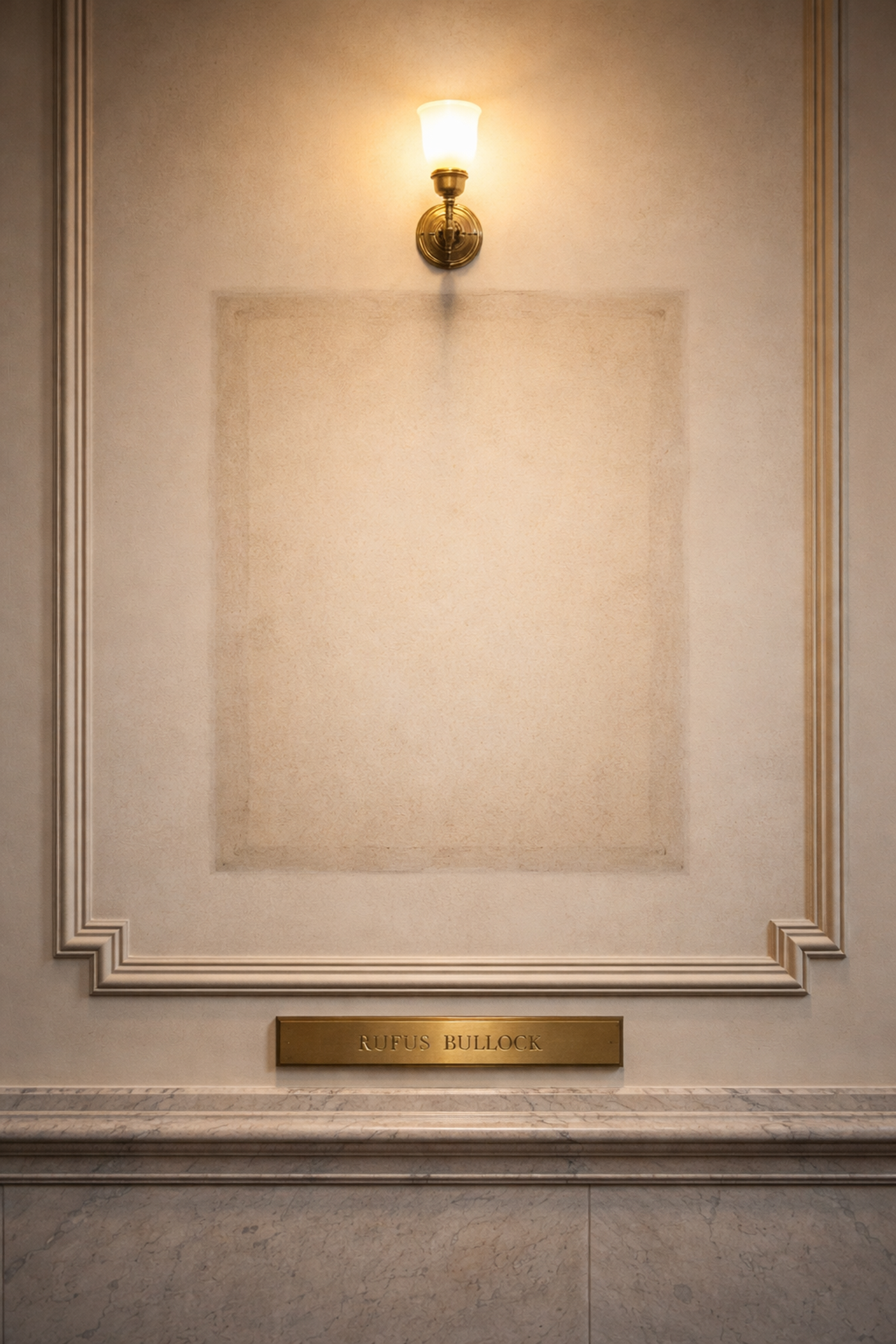
ATLANTA – After a portrait of former Georgia Gov. Rufus B. Bullock was lost from the halls of the Georgia Statehouse for decades, Rep. Gerald Greene has introduced a resolution to the House calling for the commissioning of a new one.
“To bring him to life again is pretty interesting, to let him live again in the history of Georgia," said Greene, a Republican from Cuthbert and chair of the State Properties Committee and sponsor of HR 1859 brought forward yesterday.
If passed, Bullock’s would be the first historical portrait added to the Capitol Museum art collection since 1975.
According to historical newspaper accounts, a portrait of Bullock once hung in the Capitol, but it was lost in the last 100 years. All existing images of Bullock show him in a distinctive flowing, pointed beard.
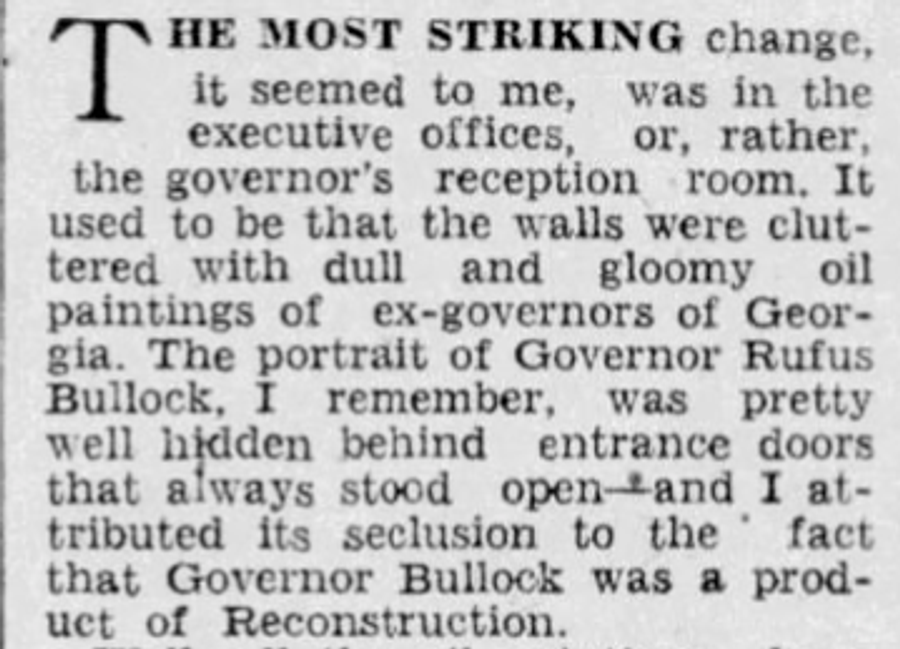
“The portrait of Governor Rufus Bullock, I remember, was pretty well-hidden behind the entrance doors that always stood open,” wrote columnist Ralph Smith in a 1934 Atlanta Journal story, “and I attributed its seclusion to the fact that Governor Bullock was a product of Reconstruction.”
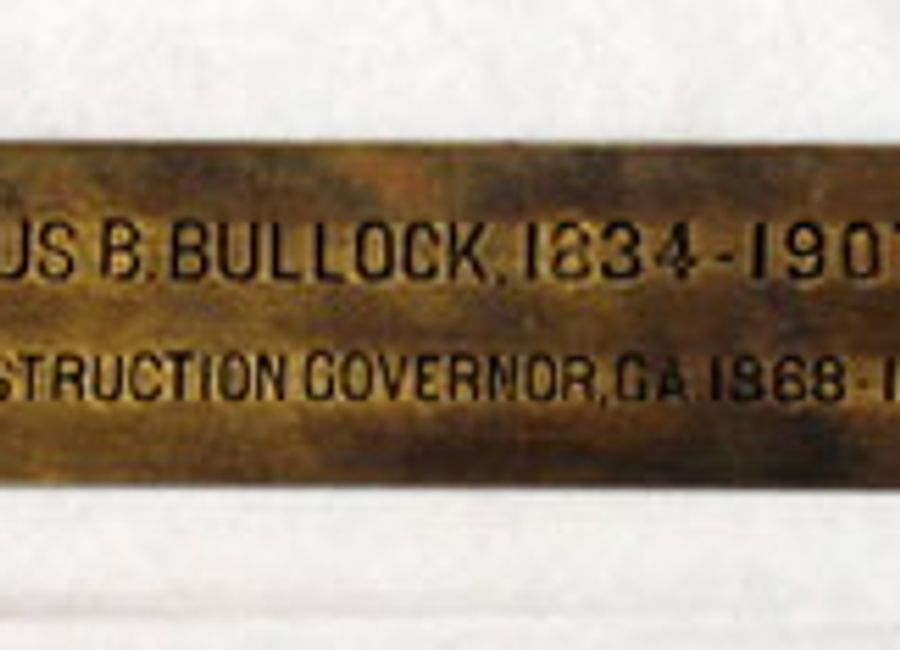
While researching portraits for this story — Bullock is the only governor since 1843 whose likeness does not belong to the Capitol collection — Museum Registrar Karin Johnston Dalton found a portrait nameplate bearing Bullock’s name and tenure in the collections storage vault in Athens. (The Georgia Capitol Museum, which manages the art and property found within the Statehouse, is a department of the University of Georgia Libraries.)
That nameplate had been misidentified under “Bulloch”, the name of another former Georgia governor, and thus had been lost in the archives until the days leading up to this story.
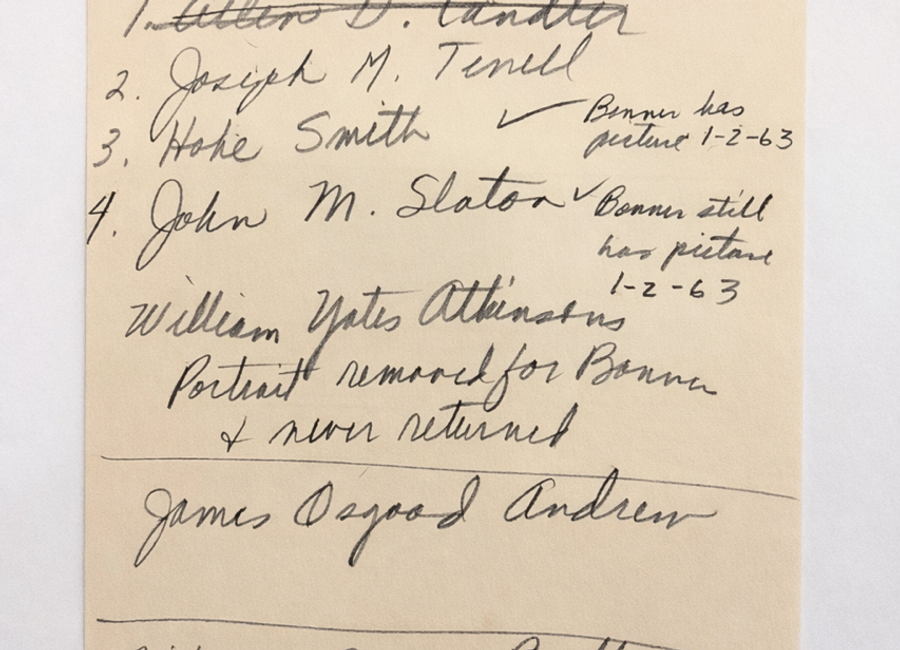
Dalton confirmed that the Capitol Museum has searched its storage and the UGA archive for the lost portrait, even comparing a photo of Bullock with that mustache-beard to the unidentified works in the collection, but that she is “pretty confident” it is no longer there.
The absence of the portrait has been noted throughout history, with the Atlanta Journal-Constitution calling it out as recently as 2015. News articles emerged again in 2024 with legislators considering a measure to honor the absent governor, but no bill was ever introduced.
It was only this week that a search of newspaper archives revealed that a Bullock portrait once hung – and then Dalton found the nameplate to confirm it.
Bullock, a native of New York who moved to Augusta in 1859, was one of the founders of the Republican party in Georgia and in 1868 was elected its first GOP governor. It was some feat; Democrats would win every gubernatorial election for the next 134 years, until Sonny Perdue ended the losing streak in 2002.
“The portrait of Governor Rufus Bullock, I remember, was pretty well-hidden behind the entrance doors that always stood open.”
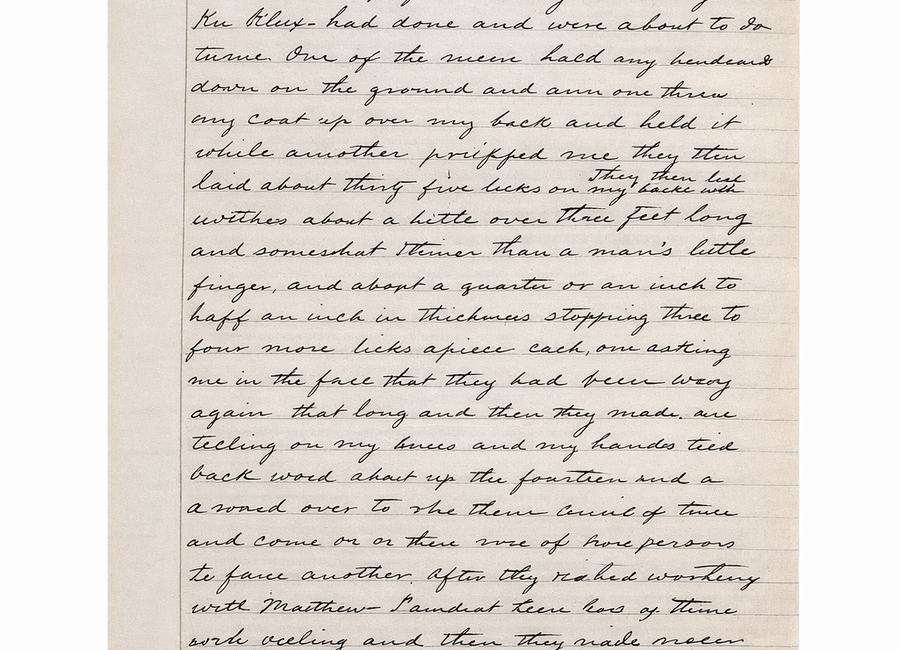
Bullock’s tenure as governor was fraught, as his nascent party that supported federal Reconstruction found many adversaries in the longtime Democrats who fought for a return to the antebellum status quo. The emergence of the Ku Klux Klan provided a violent edge, and Bullock was cast as a “carpetbagger” villain.
Author Russell Duncan, who wrote the 1994 Bullock biography “Entrepreneur for Equality,” said in an interview that Bullock was an example of “how to do right in a place that does wrong.”
“You can imagine the disruption after four years of civil war,” said Duncan, now a professor emeritus at the University of Copenhagen. “And the Klan rising up and how bitter that must have been. … You need an antagonist, you need a hated figure, so Bullock provides that pretty well.”
Bullock and the “Radical Republicans” were on the side of civil rights for black Americans, championing the passage of the 13th, 14th and 15th amendments ensuring black citizens the rights to freedom, due process, suffrage and office holding.
But he was beset by confrontation, ridicule and violence. The boxes containing Bullock’s governors’ correspondence at the Georgia Archives in Morrow are filled with dozens of pleas from black and white citizens to do something about the Klansmen wreaking terror on the state.
Intimidation in the form of harassment, assault and murder eventually won out, and Bullock was forced from office in 1871 and fled to New York for the next six years. He would return in 1877, face two trials for corruption, be found not guilty in both, and resumed a lifestyle in Atlanta of success and prominence. He became president of the city’s first cotton mill, senior warden of St. Philip’s Episcopal Church and the President of the Chamber of Commerce, among other things, before dying in 1907.
The accepted historical narrative of Bullock has shifted significantly over the eras. Early 20th century scholarship of Reconstruction was dominated by the “Dunning School,” which disparaged the Radical Republicans who fought for civil rights. In this view, Bullock was a “carpetbagger” – a non-native of the state – who led a corrupt administration and fled in ignominy.
Later scholars, including Duncan, paint a much more favorable view of Bullock as a practical administrator fighting for civil rights in the face of enormous adversity.
With the introduction of his portrait resolution, Greene said he’s ready to shake out the truth.
“We preserve history on the bad, the good and the ugly,” he said. “It’s important to always do that. It is a good lesson in the lives of individuals, to look at things in a different perspective. Right now we’re trying to figure out where the portrait is, why it was taken down… that’s a lot of why’s in there. And that’s what makes life interesting.”