“He started wrong and never got right”
Rufus Bullock skipped town in the dark of night.
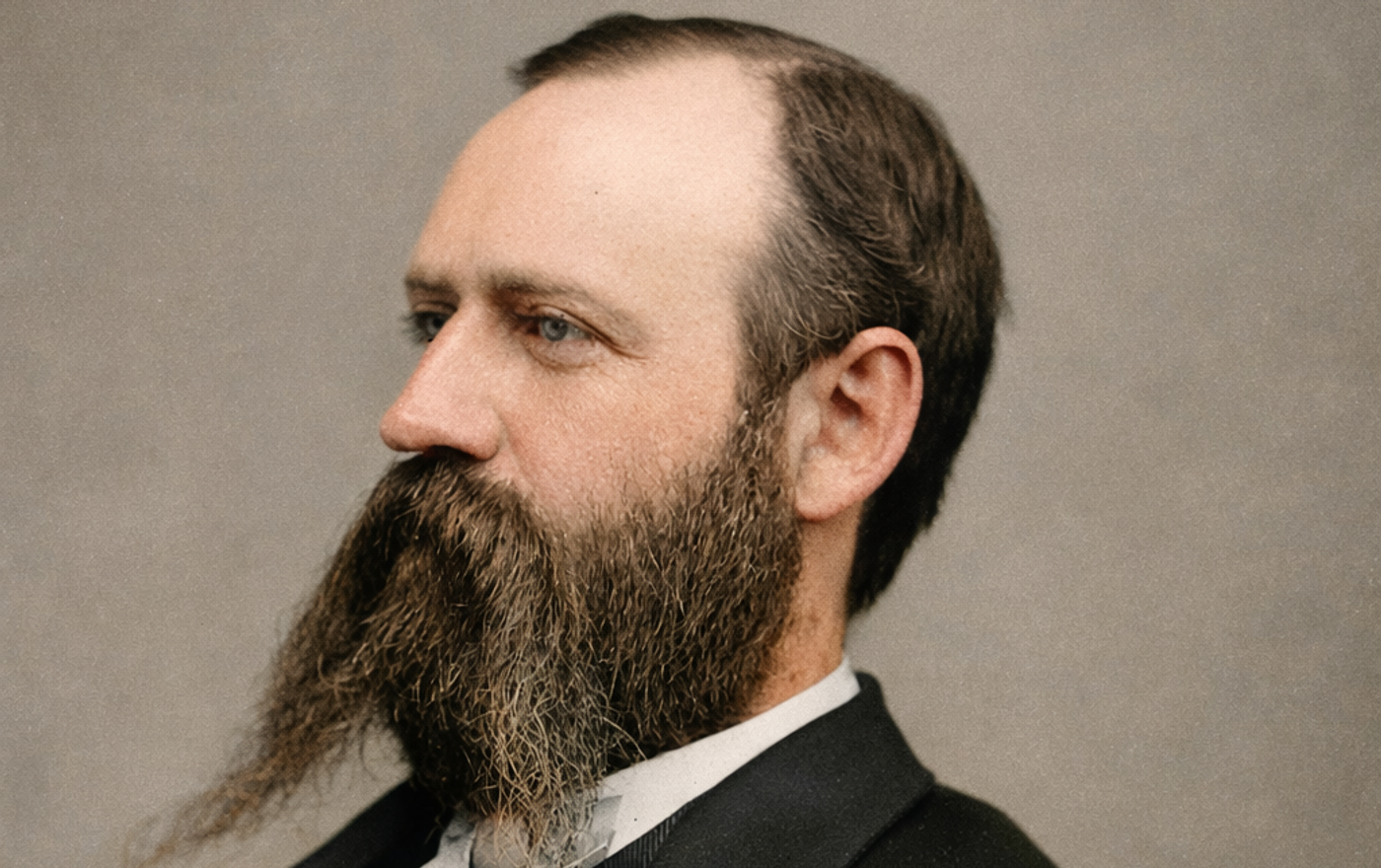
After years of corruption charges and daily conflicts with his enemies, the Republican governor played a dirty trick. Just before boarding a train from Atlanta to Washington, D.C., Bullock — a "large, handsome, social specimen of a man" with his signature angled mustache-beard — had secretly selected Georgia Senate president Benjamin Conley to be his successor. It was the only way to parry a complete Democratic takeover of both the Legislative and Executive branches of government.
It was all well enough for the Democrats, who would take the seat back in two months and then wouldn't lose another governor's race for 134 years. They would also see to it that Bullock couldn't return for another five. Not alive anyway.
As Bullock told The New York Times once his escape train made its way to Manhattan, he had been dutifully warned that he would be "Ku-Kluxed by a mob" as soon as he stepped foot back in Atlanta.
Because this was 1871, a hundred years before Jimmy Carter, and Bullock was a progressive Republican governor who fought for the civil rights of black citizens and the success of the federal Reconstruction program after the Civil War.
For his efforts, he was relieved of his office and any Southern comforts by the first installment of the Ku Klux Klan.
So then why, for the next century, was Rufus Bullock always known as the bad guy?
As school boards and state legislatures continue to battleover race-related course content and certain parts of the American History survey have been branded as "divisive" by political leaders, a look at the evolving narrative of Rufus Bullock can tell us much about what we know and don't know about the most formative and misunderstood era of our past.
Historian I. W. Avery, a contemporary of Bullock's who would surely have known, wrote in 1881 that Bullock's term "grew in its criminality. It was unbrokenly evil." In summation, "He started wrong and never got right."
Bullock was a dastard, and everyone knew it. Historians and authors would spend much of the 20th century either admonishing him or erasing him from Georgia’s history altogether.
Author Margaret Mitchell captured the sentiment of most white Georgians of the time in her seminal Gone With the Wind, which remains today the most popular work of fiction set in Reconstruction despite the 90 years that have elapsed since its inception.
Here is an abridged version of Mitchell’s exposé on Bullock near the end of that work:
The Southern Democrats had General John B. Gordon, one of Georgia’s best loved and most honored citizens, as their candidate. Opposing him was a Republican named Bullock. … Trainloads … had been rushed from town to town, voting at every precinct along the way. Of course, Bullock had won. If the capture of Georgia by Sherman had caused bitterness, the final capture of the state’s capitol by the Carpetbaggers (and) Yankees … caused an intensity of bitterness such as the state had never known before. Atlanta and Georgia seethed and raged.
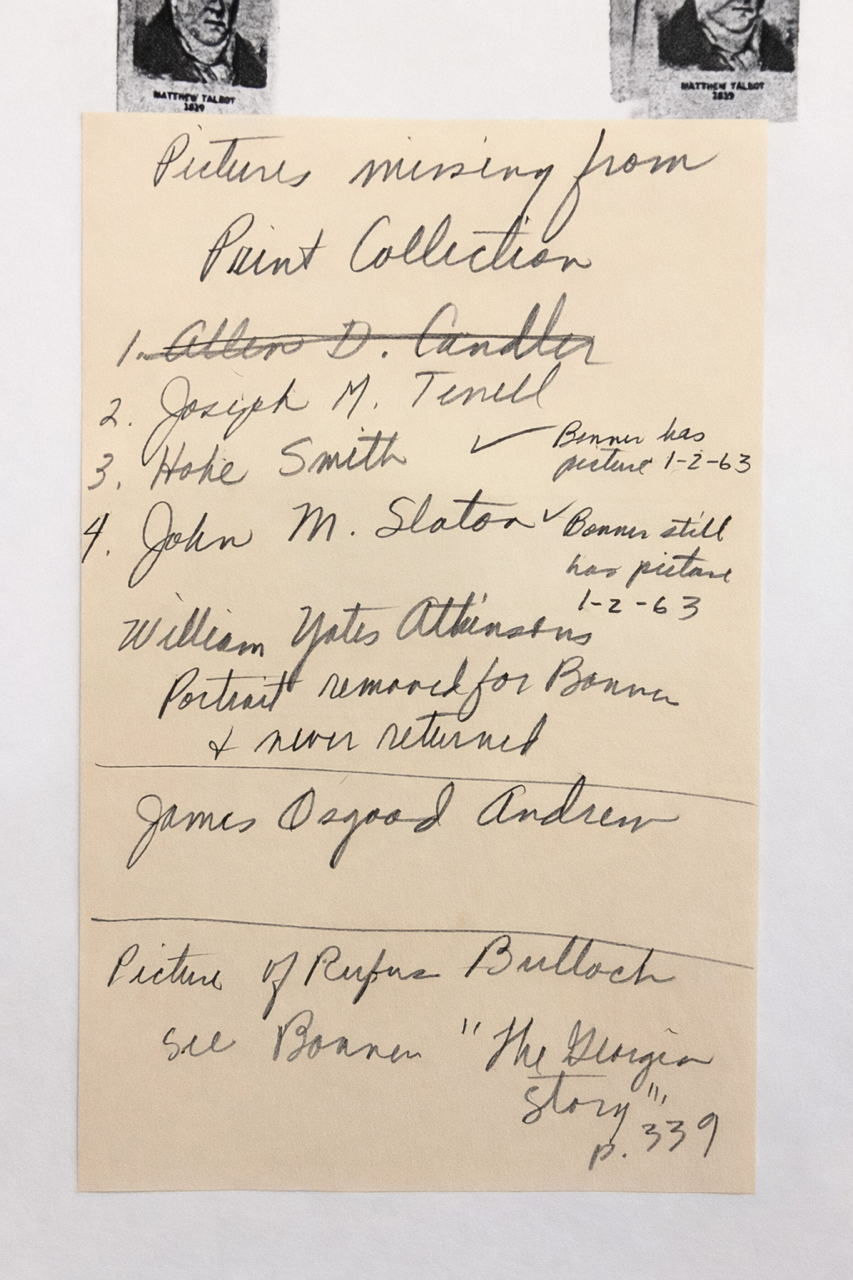
Some 30 or so years after his death, the portrait of Bullock that hung alongside other state dignitaries in the state Capitol had vanished, even though it was rarely seen in the first place since it was positioned intentionally behind an open door blocking its view.
The verdict on Rufus Bullock was in.
Until it wasn’t.
“The perpetuation of white supremacy (is) the only course possible.”
The Blind Spot
It turns out that the Reconstruction Era — the dozen or so years after the end of the Civil War — is one of the most poorly understood in American History, at least by the broader populace. In 2023 the Zinn Education Project published an exhaustive examination of the issue in all 50 states plus Washington, D.C., and found that only four US states plus D.C. earned at least a 5/10 in its State Standards Assessment of Reconstruction Education, with an average score of 1.9.
According to the report, “most people living in the United States know shockingly little about the policies, people, conflicts and ideas that shaped Reconstruction and its aftermath.”
You could call it the Great American Blind Spot.
Like poor vision, our Blind Spot has many contributing factors. One is passed down from previous generations. Another is improper systemic intellectual health care. Others are related to neglect.
The Zinn project assigned Georgia a grade of 2.5/10, citing “troubling framing,” a lack of time devoted to the topic, and poor education of the educators. In teacher testimonials, one high school teacher complained that there were only three days to cover all of Reconstruction in class, while another said that state standards “obscure the contingency of the era,” resulting in “the perpetuation of white supremacy as the only course possible” for some citizens.
Confounding the matter, as reported by Rachel Booth in The New Republic in 2022, many teachers today are afraid to even give many historical topics, including Reconstruction, their time of day for fear of retribution by school boards and angry parents.
Monuments honoring Confederate figures pepper the landscape in the South, and many of these figures were also leaders of White Supremacy groups such as the KKK during Reconstruction.
It has raised questions, then, when local legislatures have taken measures to ensure those memorials stay in place, as Georgia did in 2019 when it enacted Senate Bill 77. That bill, signed by Gov. Brian Kemp, made it exceedingly difficult to move any Confederate monuments off of public grounds. South Carolina andFlorida are debating similar measures in their 2026 legislative sessions.
But some scholars point to more fatal impacts of the Great American Blind Spot. Eric Foner, historian and author of Reconstruction: America's Unfinished Revolution, drew parallels between the actions of domestic terrorists during Reconstruction and those of the Jan. 6, 2021, insurrection at the U.S. Capitol.
"The events we saw reminded me very much of the Reconstruction era and the overthrow of Reconstruction," Foner told the New Yorker in 2021, "which was often accompanied, or accomplished, I should say, by violent assaults on elected officials. There were incidents then where elected, biracial governments were overthrown by mobs, by coup d’états, by various forms of violent terrorism.”
To better understand our Great American Blind Spot, it helps to know a bit about scotomas.
"Scotoma" is the Greek word for darkness. In medical parlance, a scotoma is an abnormality in a person's field of vision — a blind spot. Some types of scotoma are permanent if you have suffered irreparable damage to the retina. Others are treatable or reversible.
According to the Cleveland Clinic, treatment of a scotoma involves treating the underlying condition that causes it. If your blind spot is caused by glaucoma or migraine headaches, for instance, you can take medication. You can even relieve a "Scintillating Scotoma" by lying down and drinking water. The important action item is to go to a doctor to get better.
Importantly, you may not even be aware of blind spots. That's because a region in your brain called the primary visual cortex is very good at filling them in with a "cortical representation" of the visual reality in front of you. In short, what you think you see is often a narrative created out of whole cloth by your brain.
And to translate the events of Reconstruction, our early 20th century primary visual cortex was called "The Dunning School."
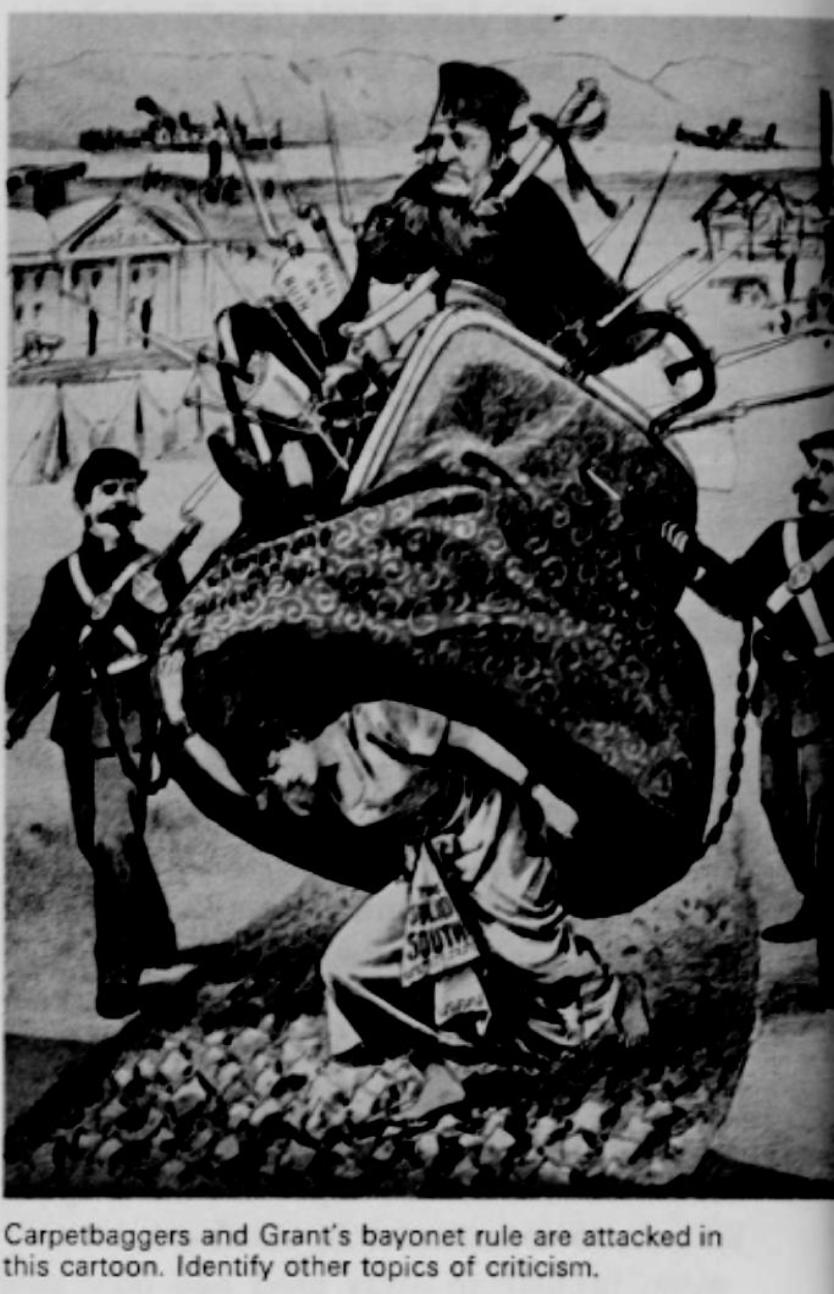
The Dunning School of historical scholarship was borne from Columbia University professor William Dunning in the early 20th century and permeated textbooks for the next few decades. The Dunning School leaned heavily into White Supremacy ideals and espoused the now-debunked Lost Cause ideology that holds that the Confederate States of America fought the Civil War in support of states’ rights, not slavery.
Its primary tenets were that black suffrage was a mistake; that freed black citizens were unable to govern; and that the Republican governments that dominated the era were inherently corrupt, oppressive and incompetent.
“This school of thought portrayed Reconstruction as a period of intense political corruption where 'ignorant' Black people were manipulated by dishonest Northern 'carpetbaggers,' and Southern 'scalawags,'" the Zinn Project authors wrote in their findings. “Dunning infused his writing with racist interpretations of the period under the guise of historical empiricism and objectivity. As such, Dunning and his students lent academic credibility to what were actually white supremacist distortions of the Reconstruction era.”
In the Dunning School, anyone who did not adhere to the approach of white supremacists was given one of those three labels: “carpetbagger” (white and not from here), “scalawag” (white and from here, but not with the program) or some version of “negro.” In this way the Dunning movement provided pseudo-heft to their argument while othering every person who did not comply with their version of the truth.
And this era of scholarship — what the Pulitzer Prize-winning Foner called "an intellectual straitjacket" — defined Bullock's place in Georgia history.
In fact, here is the entirety of that passage from Gone With the Wind, with one parenthetical added for additional context on the other real person mentioned by Mitchell:
The Southern Democrats had (Ku Klux Klan Grand Dragon) General John B. Gordon, one of Georgia’s best loved and most honored citizens, as their candidate. Opposing him was a Republican named Bullock. The election had lasted three days instead of one. Trainloads of negroes had been rushed from town to town, voting at every precinct along the way. Of course, Bullock had won. If the capture of Georgia by Sherman had caused bitterness, the final capture of the state’s capitol by the Carpetbaggers, Yankees and negroes caused an intensity of bitterness such as the state had never known before. Atlanta and Georgia seethed and raged.
It is important to note the missing qualifiers from Mitchell’s final sentence. The election of 1868 was the first in which black citizens in Georgia were permitted to vote, and they overwhelmingly voted for the candidate in favor of the rights of black citizens to be free, to hold public office, and to vote – Bullock. Those black citizens were surely not the “Atlanta and Georgia” that Mitchell insists were seething and raging.
The Dunning School domination ensured that generations of schoolchildren of all races learned only a version of Reconstruction favored by Dunning. Such a worldview had no place for Bullock other than as an enemy of the "true state."
And so there lay the legacy of Bullock for over 100 years, until the Civil Rights movement of the 1950's and 1960's began to loosen the straitjacket of intellectual discourse. By the 1980s, Foner became the central voice in this period of Reconstruction Enlightenment, and his 1988 Reconstruction was and is considered the most formative work done on the era in popular nonfiction.
Foner, then, found his way onto the dissertation boards of some doctoral students, and along came a PhD candidate with a particular passion for the civil rights battle of postbellum Georgia. His name was Russell Duncan.
The Biographer
Duncan was raised in Statesboro, GA, and went on to serve Gov. Jimmy Carter in the Georgia Bureau of Investigations – even having a few fortuitous interactions with the future president. After serving as a flight commander for reconnaissance missions over Germany in Cold War operations after the Vietnam War, Duncan returned to graduate school at UGA to study history.
That’s when he found Bullock.
Rufus reminded Russell of Jimmy, and so Russell spent the next two years writing the first impassioned defense of Rufus Bullock, hopping from state to state visiting museums, delving into archives and hunkering down in reading rooms to learn all he could about the Republican whose only distinction at that point, as historical author James Cook said in his 1979 Governors of Georgia, was as "the most unpopular governor the state ever had."
There were roadblocks immediately. Duncan was heartbroken to learn that a cache of Bullock personal papers — thousands of pages of letters and diary entries, by one account — had been discovered in the 1930’s, and then immediately sold off to stamp collectors.
Then there were the newspapers. Those yellow pages.
Of the more than 100 papers in circulation during Bullock’s governorship, Duncan estimates that only two were favorable to the Republican, with most explicitly hostile to him and his regime.
One of those was the Augusta Chronicle & Sentinel, the paper of record of Bullock’s erstwhile adopted hometown. It was led by former Confederate Gen. Ambrose Ransom Wright, who spent much of his editorship mercilessly hammering on Bullock.
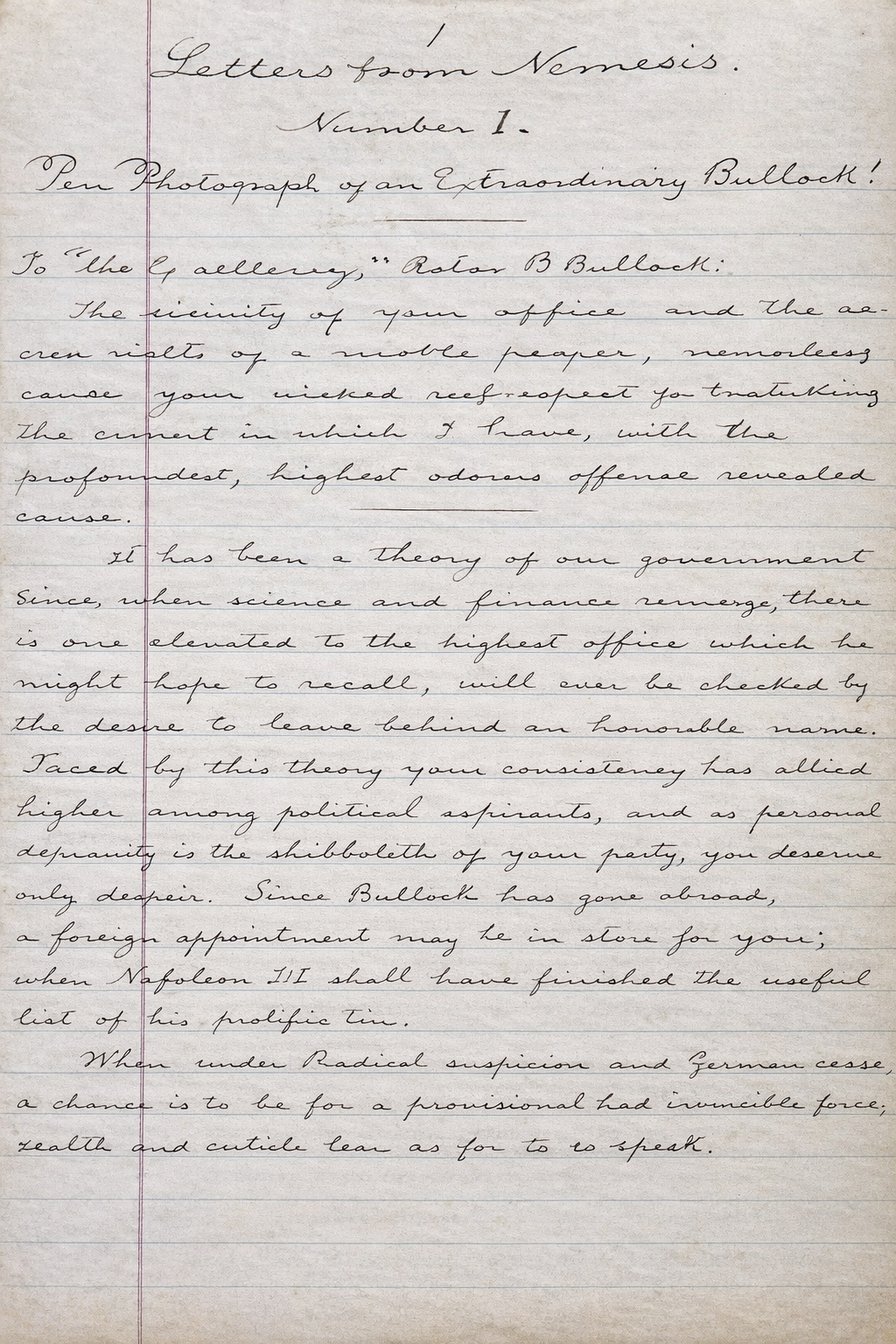
It came to a head in 1871, when the Chronicle & Sentinel published the “Nemesis Letters,” a collection of four anonymous essays that would define the anti-Bullock narrative for the next century. Bullock by now was an effective lame duck, with his opponents set to take their seats in state congress that November and sure to oust him.
The letters were meant to excoriate Bullock, shredding his reputation and legacy to bits with bombasts of colorful language. The author reveled in his cruelties, comparing the governor to Nero, Benedict Arnold and other known scourges.
The letters were also rife with white supremacist invectives.
“You confederated with brutal negroes and every thieving adventurer from the region of your nativity, to destroy the peace and prosperity,” read one letter. “ ... Eager to do them wrong, but too stupid to conceive the plan, you became the vile tool and political pimp of cunning knaves, through whose devices and your opportunities, you have made your name classic in the annals of crime.”
The author was Savannah lawyer Thomas Norwood, who would soon run successfully for the U.S. Senate. Norwood was also the curator of the Georgia Historical Society — which is to say that the man in charge of collecting and organizing the story of Georgia also publicly ridiculed the sitting governor as a stupid, vile, criminal political pimp.
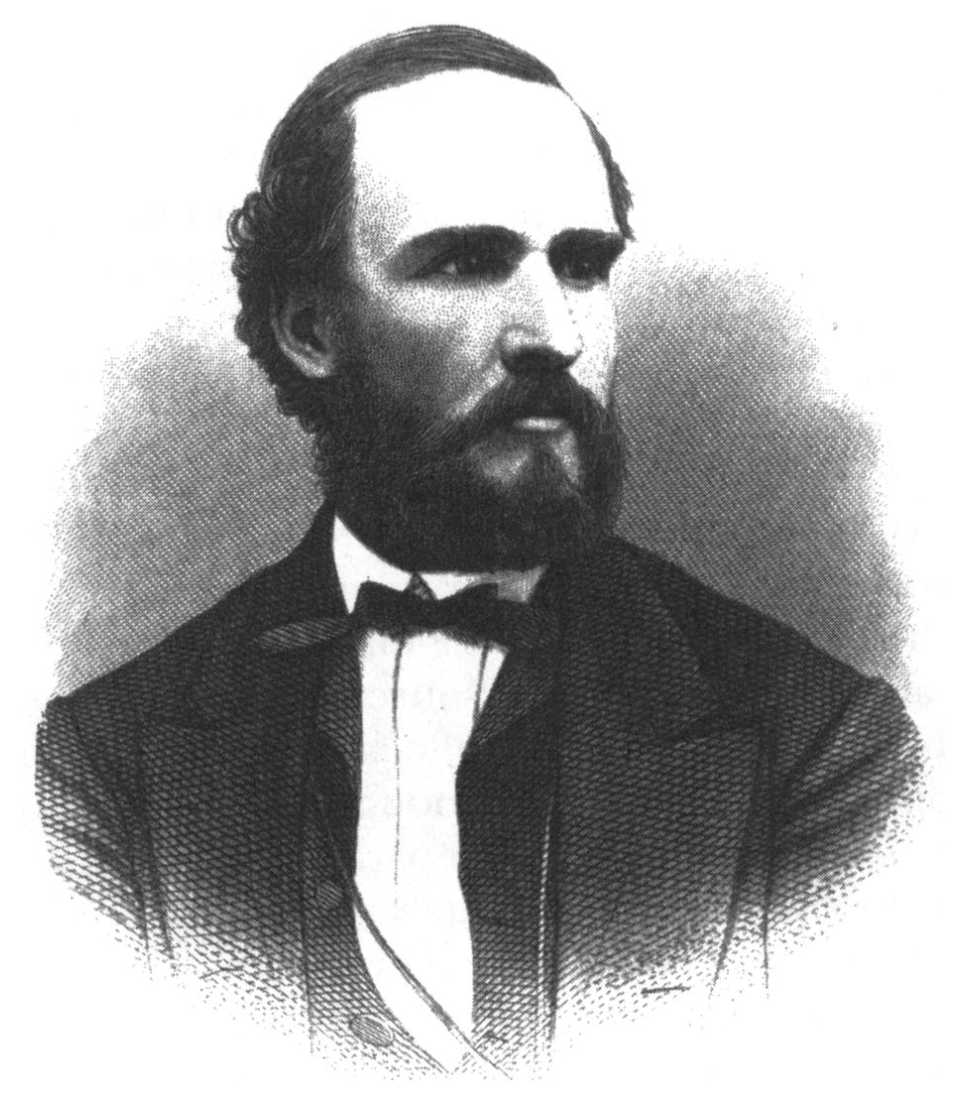
Norwood had given the future Dunningites their cortical representation of Bullock.
As Duncan would write in Entrepreneur for Equality, the letters established “what became the myth-history of Reconstruction as developed in later years by … Margaret Mitchell… and other Southern apologists.”
A biographer’s essential building blocks are the contemporary writings of their subject and his peers. And this is what Duncan, in 1988, was up against: Bullock’s personal papers had been scattered across the country to stamp collectors, and the scholars and journalists of his time had buried him alive. Maybe the magnitude of that challenge dissuaded every other would-be biographer in the 80 years since Bullock’s death.
But despite the researching headwinds, and the demands of a young family, and a day job teaching history, and other logistics of a PhD candidacy, Duncan managed to complete his biography, published a few years later under the title Entrepreneur for Equality.
Duncan's report was a complete reversal of the previous 100 years of Bullock scholarship.
The Southern Progressive
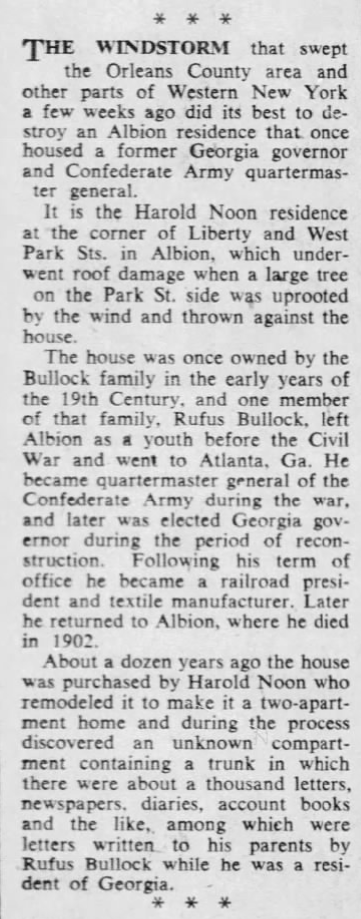
Bullock grew up in Albion, NY, near Frederick Douglass' Rochester and the heart of the evangelical abolitionist movement. As a teen he showed a proclivity for a new technology that was emerging as the most disruptive communications advance in human history. As a practical application, it was younger than OpenAI’s GPT-1 is today when Bullock got his first job at a tech startup harnessing it. By 17, Bullock was a telegraph man.
He moved to Augusta in 1859 for business and would continue running telegraph and logistics for the Confederacy during the Civil War. After the defeat of the Confederate States and with the federal Reconstruction plan underway, Bullock entered politics and became one of the founders of the Republican party in Georgia.
Though he was a former slaveowner, Bullock cast his lot with the “Radicals” and the 99,000 newly enfranchised black voters in the state and spent the next several years fighting for black citizens’ civil rights and against the tyranny of the upstart Ku Klux Klan.
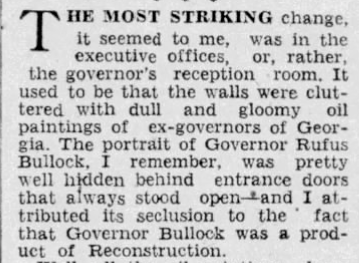
In 1868 he opposed Gordon – the former Confederate General and soon-to-be Grand Dragon of the Klan – and despite some voter intimidation by thugs of the Democratic Southern Redeemers, Bullock won the election by 7,000 votes, or 4 percentage points.
It was some feat; Democrats would win every gubernatorial election for the next 134 years, until Sonny Perdue won office in 2002 as a very different flavor of Republican.
Gordon, a “relatively obscure Confederate general,” according to a 2021 Georgia State study, would go on to later become governor and U.S. Senator, and a 23-foot statue of his likeness atop a horse guards the lawn of the Statehouse today.
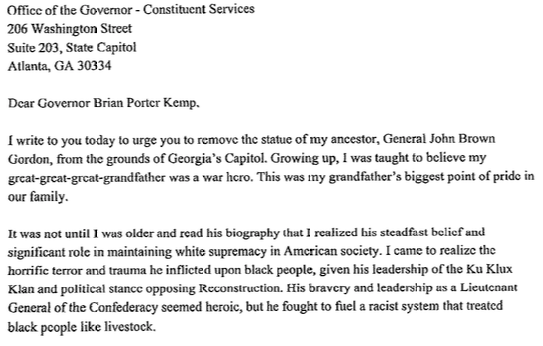
That statue has been the subject of much debate in recent years, boiling over in protests after the killing of George Floyd in 2020 with crowds chanting “Tear Down Gordon.” Seven of Gordon’s living descendants even sent a letter to Georgia Gov. Brian Kemp urging the removal of the statue, citing “the horrific terror and trauma he inflicted upon black people” and saying he “fought to fuel a racist system that treated black people like livestock.”
During Bullock’s inaugural addresses, however, the newly elected governor delivered a strikingly progressive tone, calling out the “wisdom” and “justice of enfranchising the freedmen.”
“It is too late now to argue,” he said, “that a native American has no rights because his complexion is not that of the majority. … All civilized men are citizens.”
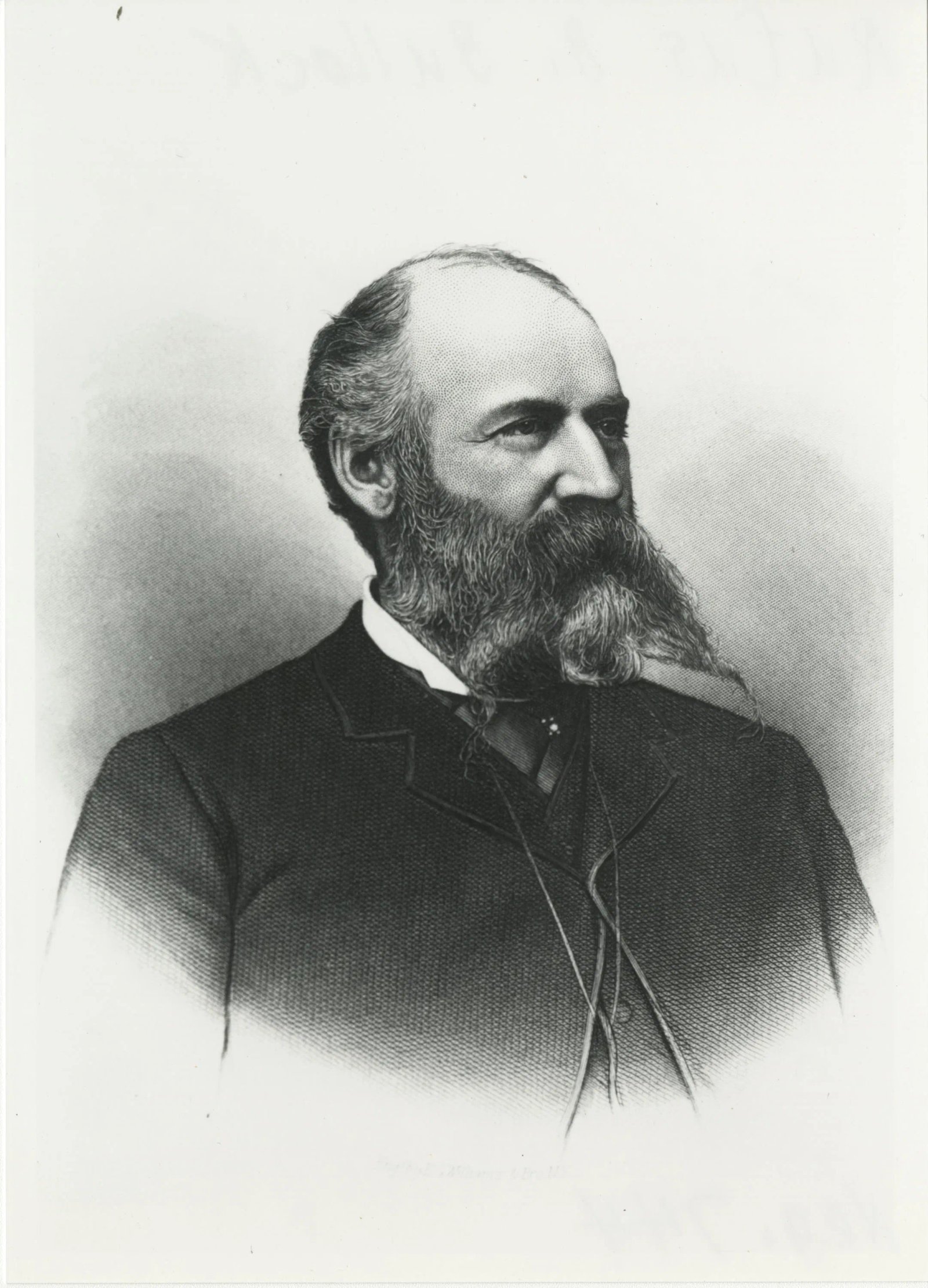
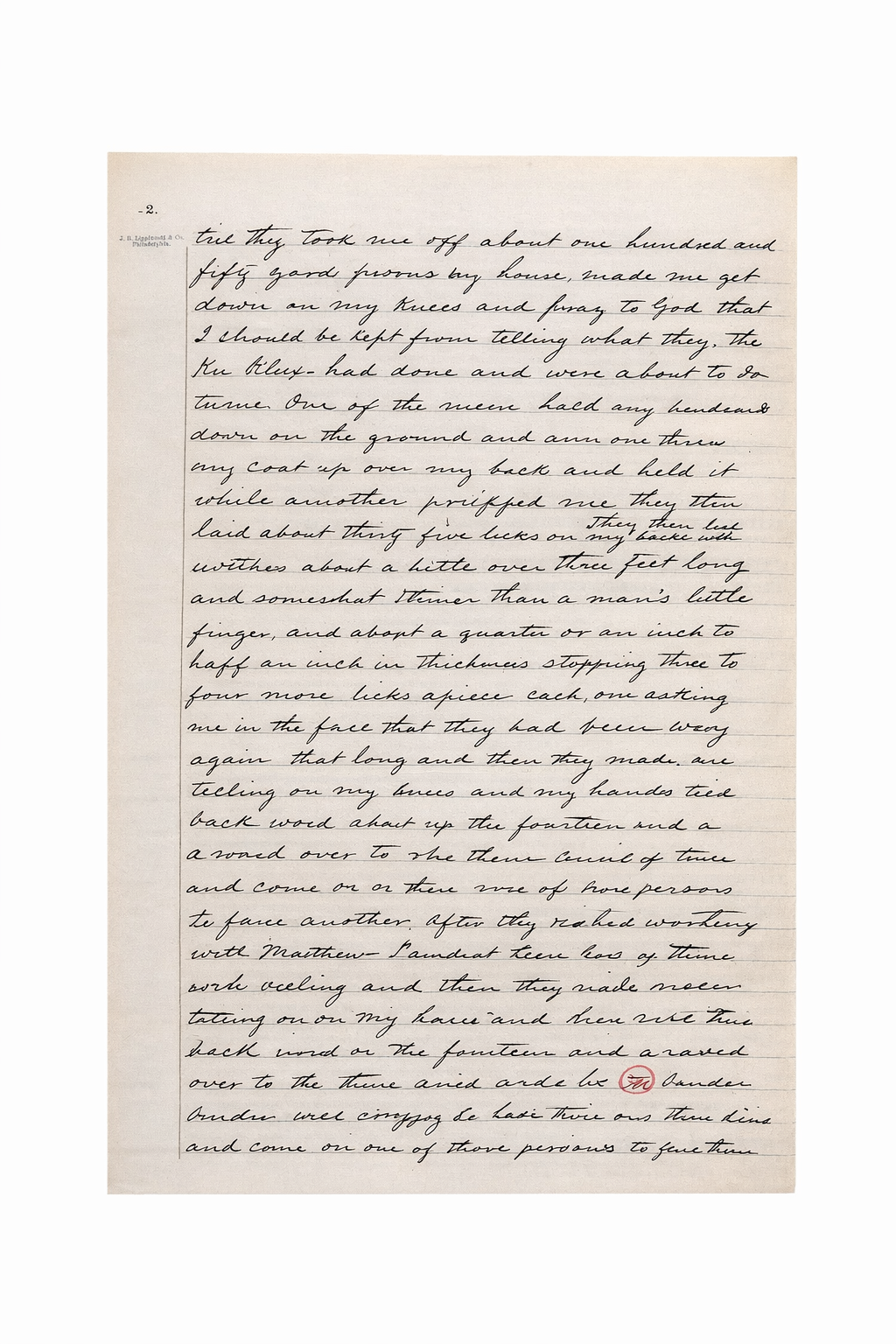
And so then the Klan gave Bullock endless fits. The boxes containing Bullock’s governors’ correspondence at the Georgia Archives in Morrow are filled with dozens of pleas from black and white citizens to do something about the Klansmen wreaking terror on the state.
“You can imagine the disruption after four years of civil war,” said Duncan, now a professor emeritus at the University of Copenhagen, in a recent interview. “And the Klan rising up and how bitter that must have been. … You need an antagonist, you need a hated figure, so Bullock provides that pretty well.”
Nevertheless, Bullock got to work right away. He took office along with the “Original 33” black members of the Georgia General Assembly, who would later be expelled from the Assembly by Democrats and then reinstated by the Georgia Supreme Court. As Duncan wrote, “Bullock was a man of moral conviction who sought recognition on the side of progress. He would not sell out.”
As governor, Bullock would help move the capital from Milledgeville to Atlanta, and he oversaw a rapid re-development of infrastructure, including railroads, schools, hospitals and other public works.
Bullock and the Radical Republicans also championed the passage of the 13th, 14th and 15th amendments ensuring black citizens the rights to freedom, due process, suffrage and office holding. And he frequently pleaded with the administration of President Ulysses S Grant for additional federal resources and the continuation of federal military occupation in Georgia to see through the plans for Reconstruction.
That only steeled his adversaries against him.
Bullock was forced from office in 1871 and fled to New York for the next six years. The Democrats and press would attribute his flight to a certain upcoming impeachment, which was true, and the evasion of justice for what they deemed wholesale corruption, which was trumped up.
Duncan wrote of a more practical reason. He feared for his life.
“Obviously, the Klan had done its work very well.”
The Rise of the Klan
The Ku Klux Klan should be thought of more as open-source branding than a formal organization across the states. Before white supremacists had the Ku-Klux, they were a smattering of terror cells that independently ravaged their communities.
According to Elaine Parsons in her 2015 work Ku-Klux: The Birth of the Klan During Reconstruction, this was good for staying under the radar but bad for instilling fear long distances. If you lived in Mississippi, for instance, you may not have heard of the Knights of the White Camellia in Louisiana, and if you had, their existence would not be a threat to you. As Parsons wrote, “the Ku-Klux Klan would solve this problem.”
Whereas Bullock had won his gubernatorial race neatly, the Klan stepped up its guerrilla warfare tactics to ensure Georgia would not send in Republican electors in the Presidential election of 1868.
According to Duncan, after a Gordon rally on Sept. 23, about 50 Klansmen looted the black-owned homes of Covington and threatened to kill anyone who would vote in the election. Two days later, one witness described, 30 men wearing “masks and fancy dresses” choked, beat and dragged a black man, sparing his life only after he promised to vote Democrat.
It worked this time. Horatio Seymour defeated Republican Grant by more than 45,000 votes in Georgia, with an estimated 54,000 black citizens intimidated into either abstaining or voting Democrat.
“Obviously,” Duncan wrote, “the Klan had done its work very well.”
Eleven counties registered a total of 0 votes for Grant. Another five that had skewed heavily toward Bullock now showed a total of 17 Grant votes in the official tally. Democrats even took 41 of the 54 majority-black counties.
The Klan takeover also ensured Democrats would regain the Capitol comfortably and that Bullock’s political days were numbered. He resigned office quietly on Oct. 23, nine days before Democrats would convene the legislature, and left town that week, telling his friends that he would be “Ku-Kluxed by a mob” if he were to return to Atlanta.
And so he didn’t for five years, but neither could he leave the stink of the calamity behind him in Georgia. Due to the suspicion – or presumption – of his guilt there, he was unable to run business or get a job for the entirety of his New York exodus. "Undoubtably,” Duncan wrote, “poverty and frustration influenced his decision to return to Georgia."
So return to Atlanta he did in 1877. And as for the corruption charges?
To anyone attuned to the 21st century news cycle they would hardly register as corruption. But in the 1870's such claims were de rigueur. The offenses were tied to railroad contracts (a vendor came up short in its deliverables), printing charges, and the purchase of an opera house to be used as a temporary Capitol.
Bullock faced two trials for corruption in 1878 and was found not guilty in both.
Rufus Bullock, then properly effaced, resumed a lifestyle in Atlanta of success and prominence, becoming president of the city’s first cotton mill, senior warden of St. Philip’s Episcopal Church and the President of the Chamber of Commerce, among other things, before dying in 1907.
Some carpetbagger.
In 1881, I. W. Avery, a contemporary of Bullock's who should know, said that he "started wrong and never got right." In a 2026 interview with The American Piedmont, Duncan, a 30-year scholar of Bullock's who would know better, offered this about Bullock's legacy instead:
"How to do right in a place that does wrong.”
The Portrait
Today Bullock is still partly obscured by the scotoma, but the narrative tides continue to shift slowly in his favor. When alerted to the lost Capitol portrait, Rep. Gerald Greene told The American Piedmont that he was planning to introduce the topic to the House in the 2026 legislative session calling for the commissioning of a new one.
“We’re gonna do it,” said Greene, a Republican from Cuthbert and chair of the State Properties Committee. “To bring him to life again is pretty interesting, to let him live again in the history of Georgia.”
And indeed, Greene brought forth HR 1859 to the House yesterday calling for the commissioning of a new Bullock portrait. Bullock’s would be the first historical governor portrait added to the Capitol Museum art collection since 1975, when the family of David Brydie Mitchell donated their private portrait to the Capitol collection.
While researching portraits for this story — Bullock is the only governor since 1843 whose likeness does not belong to the Capitol collection — Museum Registrar Karin Johnston Dalton found a portrait nameplate bearing Bullock’s name and tenure in the collections storage vault in Athens. (The Georgia Capitol Museum, which manages the art and property found within the Statehouse, is a department of the University of Georgia Libraries.)
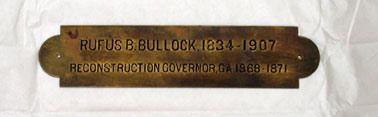
That nameplate had been misidentified under “Bulloch”, the name of another former Georgia governor, and thus had been lost in the archives until the days leading up to this story.
Dalton confirmed that the Capitol Museum has searched its storage and the UGA archive for the lost portrait, even comparing a photo of Bullock with that mustache-beard to the unidentified works in the collection, but that she is “pretty confident” it is no longer there.
There are portraits, however, of Clifford Walker and E.D. Rivers, who both served terms as governor of Georgia while also active members of the KKK. This distinction may be lost on visitors of the Capitol, or even many of its inhabitants, obscured by the historical blind spot described by the Zinn Education Project.
The Textbooks
In an interlocked and self-perpetuating chain of educational failures, the Zinn team — Ana Rosado, Gideon Cohn-Postar, and Mimi Eisen — notes that school resources, American teaching standards, curricula and textbooks have failed generations of students.
First, standards — the lessons defined by states that must be learned by students by year end — typically deprioritize history in general and Reconstruction specifically, which in turn incentivizes teachers to lend short shrift to the period or skip it altogether.
Textbook publishers, then, which have been chronically behind scholarship for decades since the long reign of Dunning began to loosen in the 1960s, are even less likely to spend resources catching up on a topic that is of relatively little interest to state school boards, which cut the publishers’ checks.
So what is taught of Reconstruction tends to be broad and federal rather than specific and local, even though the local realities — such as the domestic terrorism of the Klan — defined the actual experiences of real Americans who lived through them. The Zinn team describes this phenomenon as “a top-down history of Reconstruction focused on government, politics, and policy with little emphasis on ordinary Black people and their organizing strategies.”
This can be seen in an evaluation of school textbooks from several eras. Kemp, the Georgia governor who signed into law Senate Bill 77 making it almost impossible to move Confederate statues off of public grounds, graduated from Clarke Central High School in Athens in 1982.
We don’t have Kemp’s entire teenage bibliography, but one American History textbook that was both in popular circulation by an established publisher and on the Georgia Text Book List of 1981, when Kemp would have studied American History, is A People and a Nation (1980) by Harper Row.
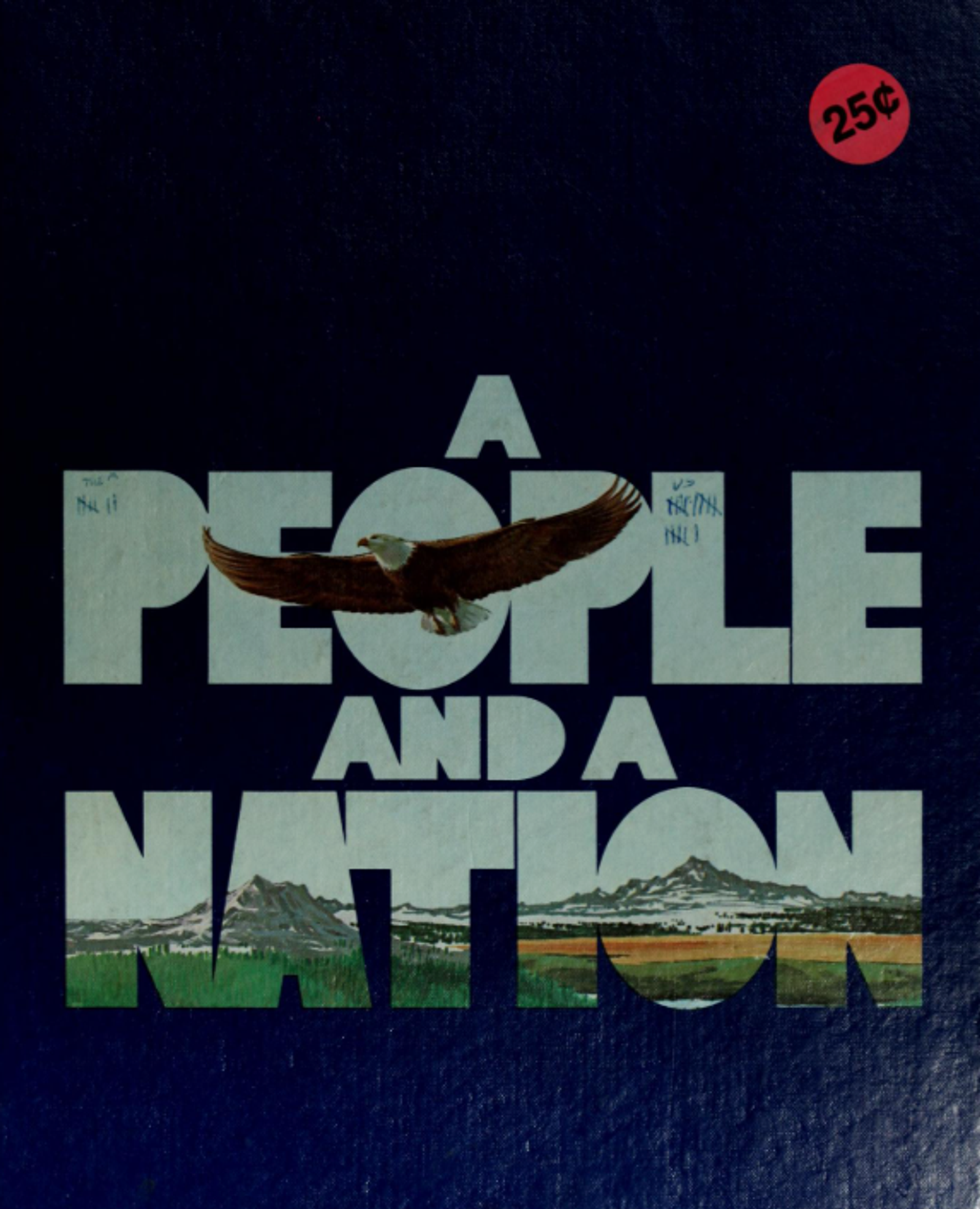
The section of that text covering Reconstruction is 17 pages long, or 2% of the total. Further, it falls just before the center of the curriculum, meaning if it were covered at the end of the first semester, it would be a likely candidate for passover (an activity confirmed by several teachers in the Zinn team’s study).
It devotes a grand total of two paragraphs to the Ku Klux Klan, mentioning violence in one sentence only with no specific examples. In fact, it spends more type (three sentences) lauding the federal government for taking action against the Klansmen than it does describing any of their actions.
There is no description of events local or federal from the perspective of contemporary black citizens, and the text lapses into Dunning explanations such as the carpetbagger-scalawag-negro coalition of Republicans. And yet this was one of the more progressive high school texts of the time and represented a marked improvement in contextual understanding of Reconstruction from the preceding decades.
Given the brevity and content of A People and a Nation, it would stand to reason that Kemp and others his age educated in Georgia never learned the horrific realities of Reconstruction, making them little different than Americans from other states and generations.
It can be difficult or impossible to treat a scotoma if you don't know you have one, because it's easy to believe in the cortical representation. But if you do recognize a blind spot, the chances are you can see a doctor and do something about it.
A portrait of Rufus Bullock may one day again hang in the Georgia Statehouse. Over time, if public knowledge begins, slowly, to catch up to what historians already know about Reconstruction, the Great American Blind Spot could recede until it no longer exists.
But for that to happen, Americans would have to see a doctor. Why are Congressmen arguing the merits of race-related education? Why is the federal government pursuing legislation to ban "divisive narratives" at the Smithsonian? Why is there a statue of a KKK leader on my Capitol lawn? Where the hell is Rufus Bullock?
Lie down. Drink water. Take medication.